There's a familiar pattern to launching something new.
Months of planning, investment and preparation lead to one important date.
The new website goes live. The venue opens. The product becomes available. The business announces its new identity.
And then everyone waits to see what happens.
Will people notice? Will they visit? Will they enquire? Will they buy?
But what if the campaign had already started answering those questions before launch day arrived?
What if people were already interested, already engaged and already waiting for the opportunity to act?
That's the difference between announcing a launch and building demand.
Launch day shouldn't be the starting line
Businesses naturally concentrate on getting everything ready.
The brand needs to be right. The website needs to work. The content needs approval. The product or experience needs to deliver.
All essential.
But it's easy for the marketing conversation to become focused on what will happen when everything is finished.
In reality, some of the most valuable marketing opportunities exist well before that point.
The period leading up to a launch gives businesses time to introduce their proposition, communicate what makes it different and start building relationships with potential customers.
It also creates opportunities to learn.
What are people responding to? Which messages are generating interest? Where is the strongest demand coming from?
That information can help shape the launch itself.
Rather than opening the doors and hoping the audience arrives, businesses can begin with a much better understanding of who's waiting on the other side.
From a new name to an audience ready to book
Our recent work with Outlaw House is a good example.
Created with acclaimed chef Nathan Outlaw and Trinity Capital Ventures, Outlaw House is a new coastal brasserie, bar and rooms in Canford Cliffs.
Studio Global was involved from the beginning, helping develop the brand strategy, positioning, personality and identity, followed by the website and launch creative.
The proposition needed to balance several things.
It had to feel special enough for an occasion, relaxed enough for a midweek visit and distinctive enough to establish a place in a competitive hospitality market.
But creating the identity was only part of the job.
The launch activity also needed to turn that proposition into genuine interest.
So the website, messaging, content and communications were developed with a shared purpose: to give people a reason to discover Outlaw House before they could experience it for themselves.
And the response was immediate.
More than 1,000 people registered their interest in the first 24 hours.
When table bookings opened, 250 were made in the first 20 minutes.
The first email campaign generated enough bookings to fill the venue for a week, while Google delivered approximately 4,500 click-throughs in a month.
Those are encouraging results for a new hospitality brand, particularly before it has had the opportunity to build its reputation through day-to-day customer experience.
The Outlaw House results are a great example of what happens when you think beyond launch day. We weren't simply creating a brand and announcing an opening. We were building an audience that was already interested and ready to act.
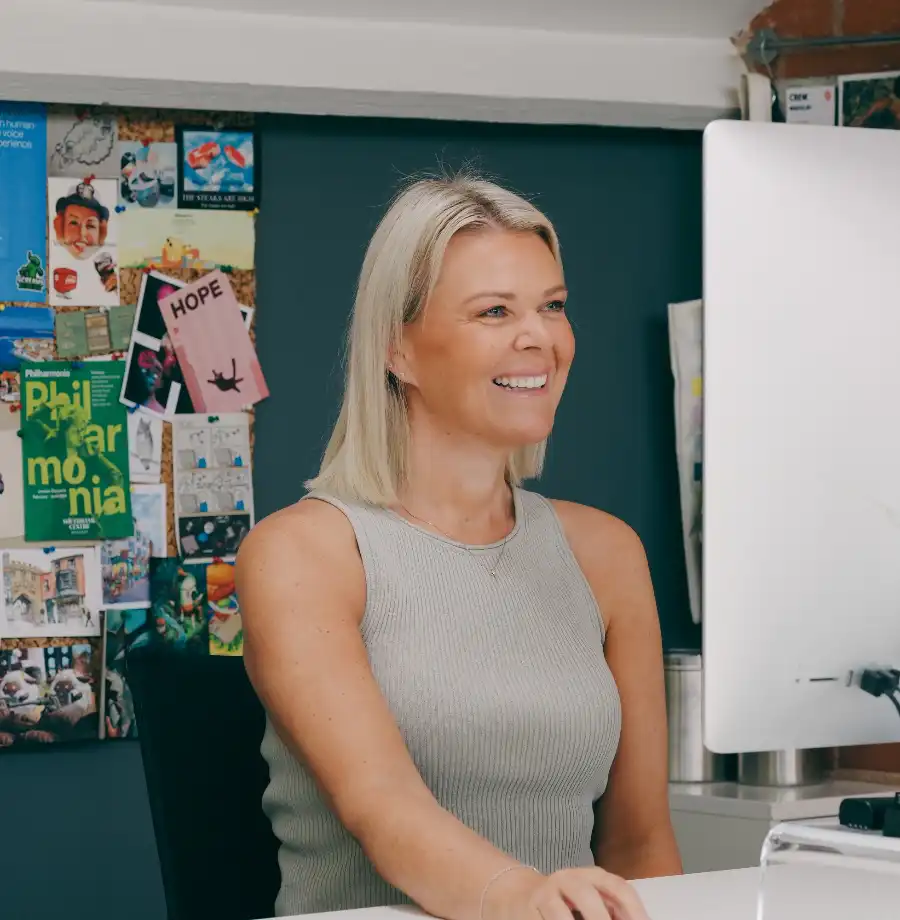 Sharon ParkerManaging Director at Studio Global
Why the different elements matter
Results like these aren't simply about producing an attractive launch campaign.
They come from giving the different parts of the marketing process a shared direction.
Brand strategy gives people a reason to care.
Before asking an audience to act, a business needs a proposition worth paying attention to.
For Outlaw House, that meant creating a distinctive hospitality experience with a clear personality, a compelling story and an identifiable place in the market.
The website turns interest into something useful.
A website shouldn't simply explain what's coming.
It should make the next step obvious.
In the early stages, that might mean registering interest, joining a mailing list or requesting launch information.
Those actions give a business a way to continue the conversation.
Content builds familiarity before the first experience.
People want to know what they're getting excited about.
Stories, imagery, filming and social content can introduce the people, personality and experience behind a new brand, making the eventual launch feel more familiar.
For Outlaw House, our partners at b4b led content filming and social media management, helping build that connection with the audience.
PR creates opportunities for wider discovery.
A compelling story can reach people beyond a brand's existing channels.
Working with Edge on launch PR helped extend the conversation into relevant media and audiences.
Email helps turn anticipation into action.
When people have already expressed interest, a well-timed invitation can be particularly effective.
The first Outlaw House email campaign demonstrated what can happen when a business has an engaged audience ready to respond.
Each element had a different role. The value came from making them work together.
The principle applies well beyond hospitality
A restaurant launch makes the results easy to see because the outcome is tangible: people book tables.
But the same thinking applies to many other businesses.
A professional services firm launching a new offer could begin educating existing contacts about the problem it solves.
A property developer could build a qualified audience before a development becomes available.
A technology business could introduce its expertise and collect early interest ahead of a product release.
An established organisation preparing to rebrand could use the lead-up to explain what is changing and why it matters.
In each case, the goal is similar.
Don't wait until launch day to start building the audience.
Use the preparation period to create familiarity, establish relevance and make the next step feel natural.
Measure more than the noise
Launch campaigns often generate plenty of activity.
Posts are published. Videos are viewed. Coverage appears. Traffic increases.
All useful indicators, but they don't tell the whole story.
The more important question is what that activity is achieving.
Are the right people engaging?
Are they registering interest, requesting information, making enquiries or booking?
Is the campaign creating an audience the business can continue communicating with?
And, ultimately, is that interest turning into commercial opportunity?
Not every launch will generate hundreds of bookings in minutes, nor should that be the benchmark for every sector.
What matters is identifying the actions that signal meaningful progress for your business and building the campaign around them.
Give people a reason to be ready
A successful launch should feel like the beginning of something, not the moment marketing starts.
The brand creates the proposition. The website gives people somewhere to act. Content and communications build familiarity and interest. And the launch gives that audience a reason to take the next step.
When those elements work together, a business can arrive in the market with more than visibility.
It can arrive with momentum.
A question worth asking: If your business were launching something important in three months' time, what could you be doing today to make sure people were ready for it?
At Studio Global, we bring brand strategy, creative, digital and launch communications together to help businesses build interest and turn it into meaningful action.